Roller Blinds
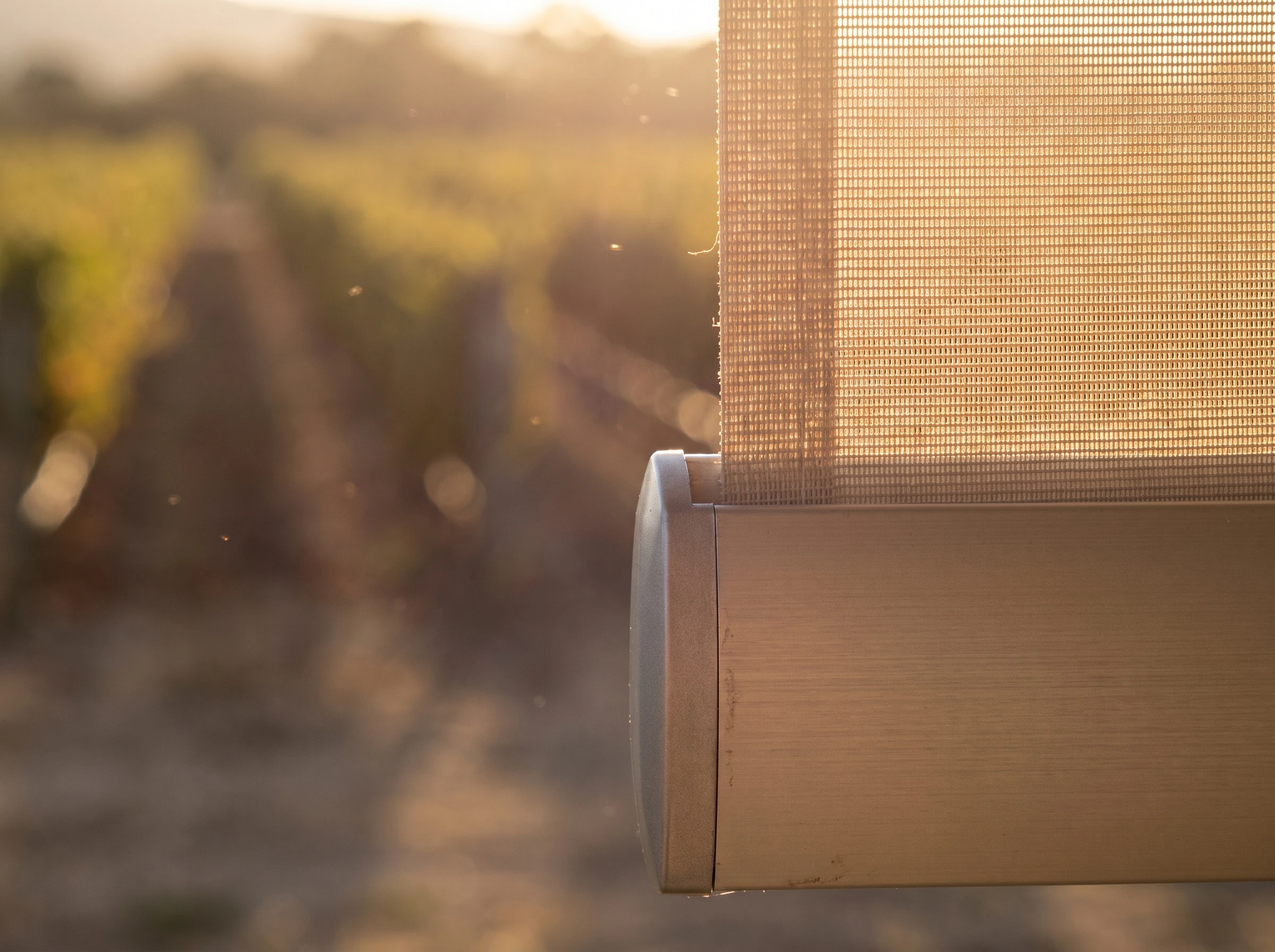
Blockout or sunscreen, made to measure for every cellar-door pane and homestead window.
Explore
Made-to-measure blinds, roller shutters and awnings for the homesteads, cellar doors and guest cottages strung along the Stellenbosch Wine Route — fitted after a free in-home measure.
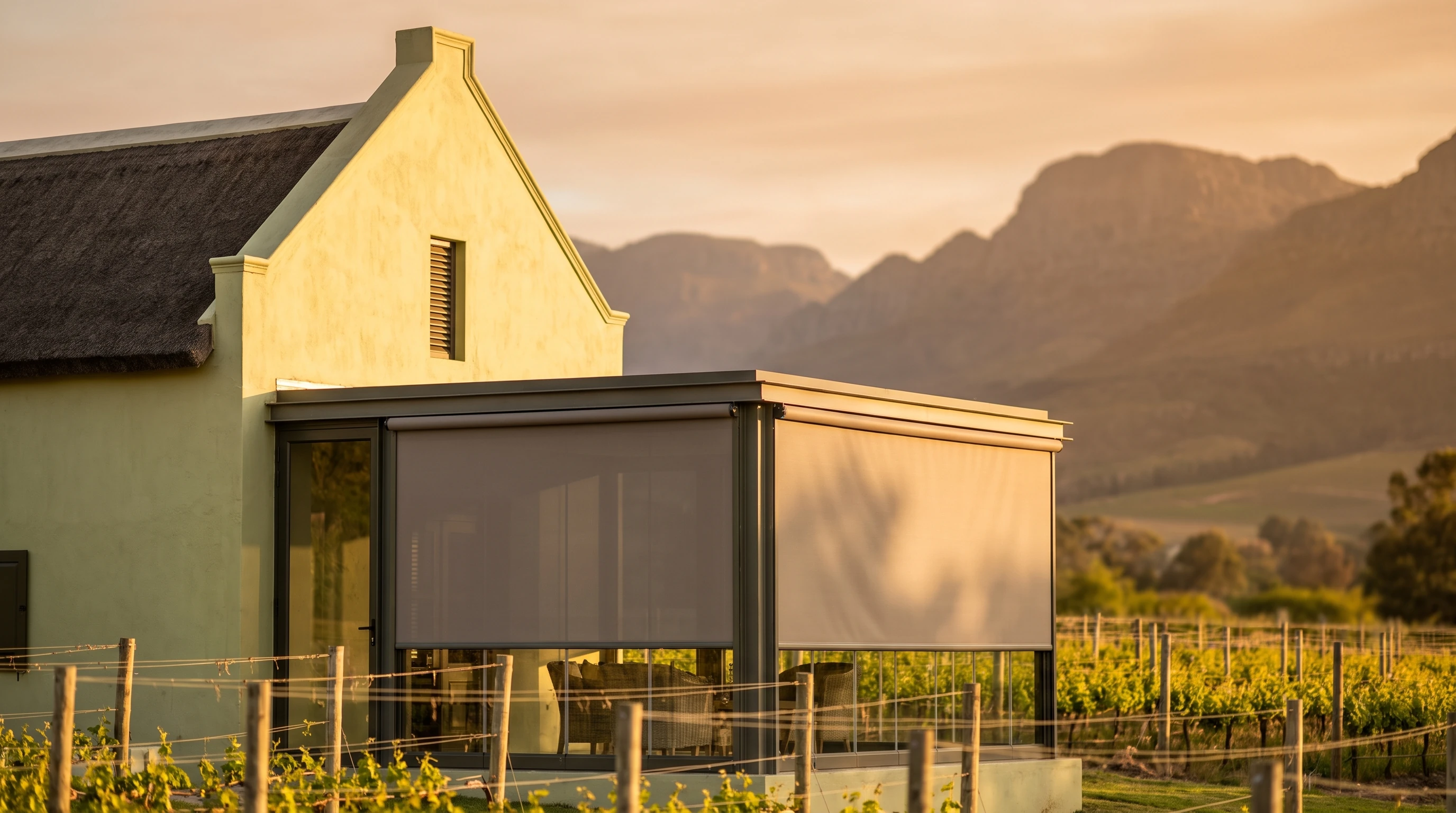
Every farm along this route carries the same pattern in some form: an old lime-washed core with small, deep-set windows, and a newer cellar-door or cottage wing built almost entirely of glass. This is the full range we measure and fit for both.

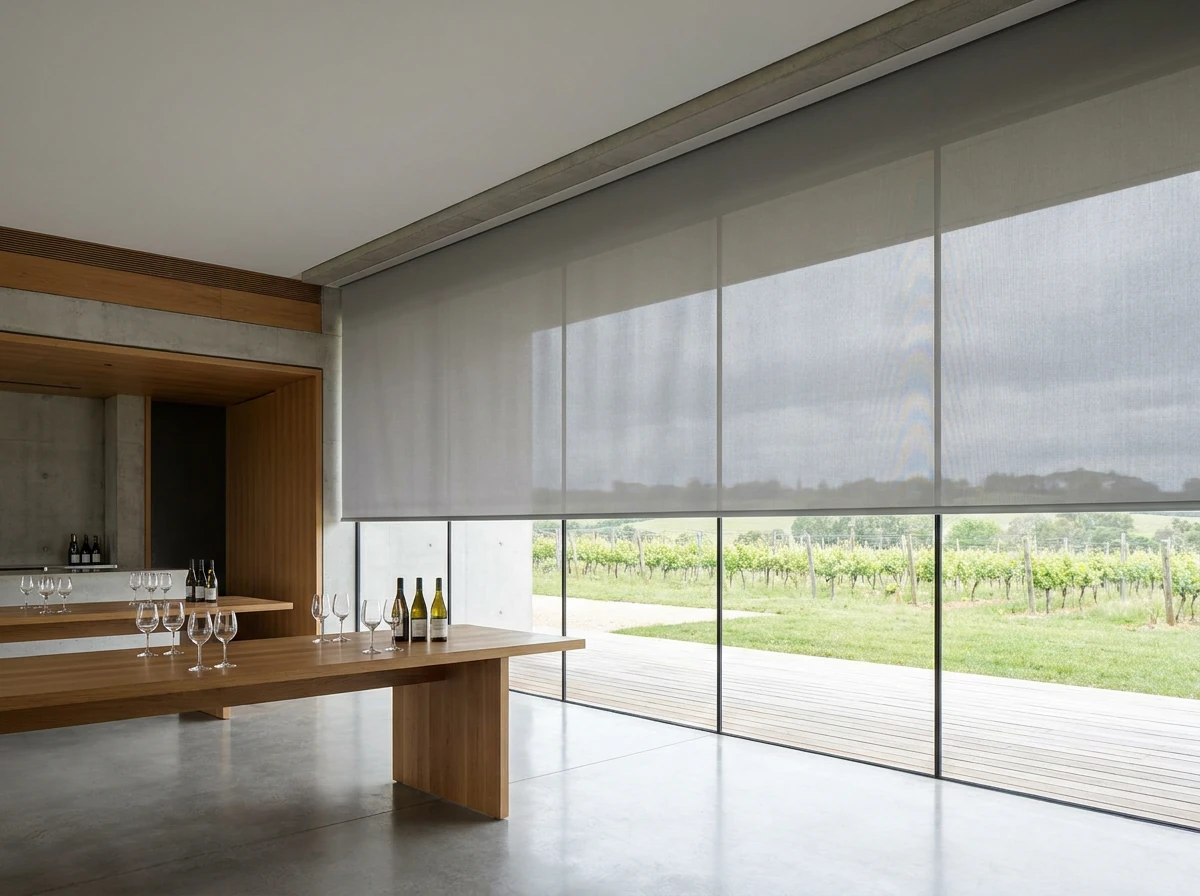
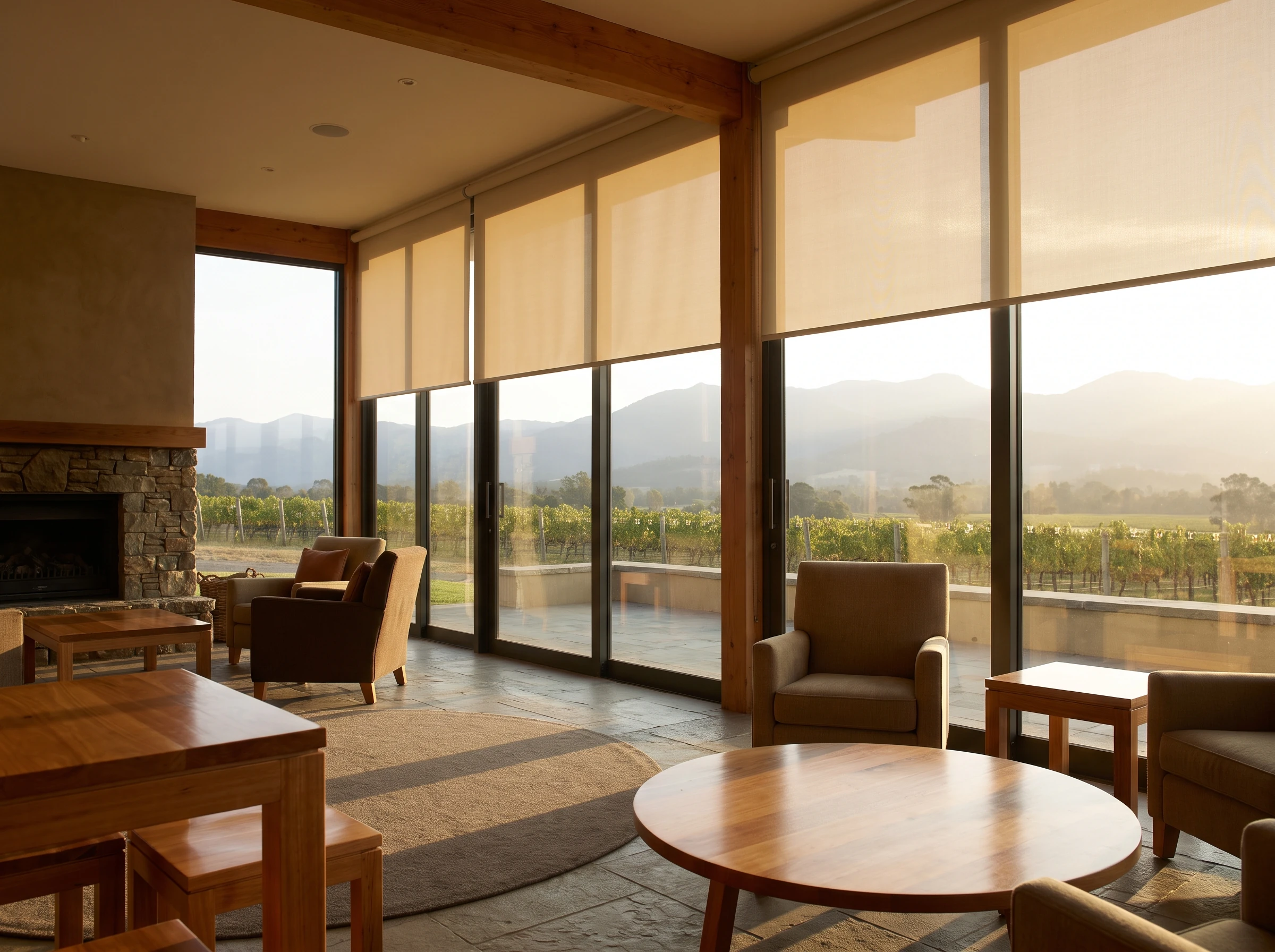
Blockout or sunscreen, made to measure for every cellar-door pane and homestead window.
Explore
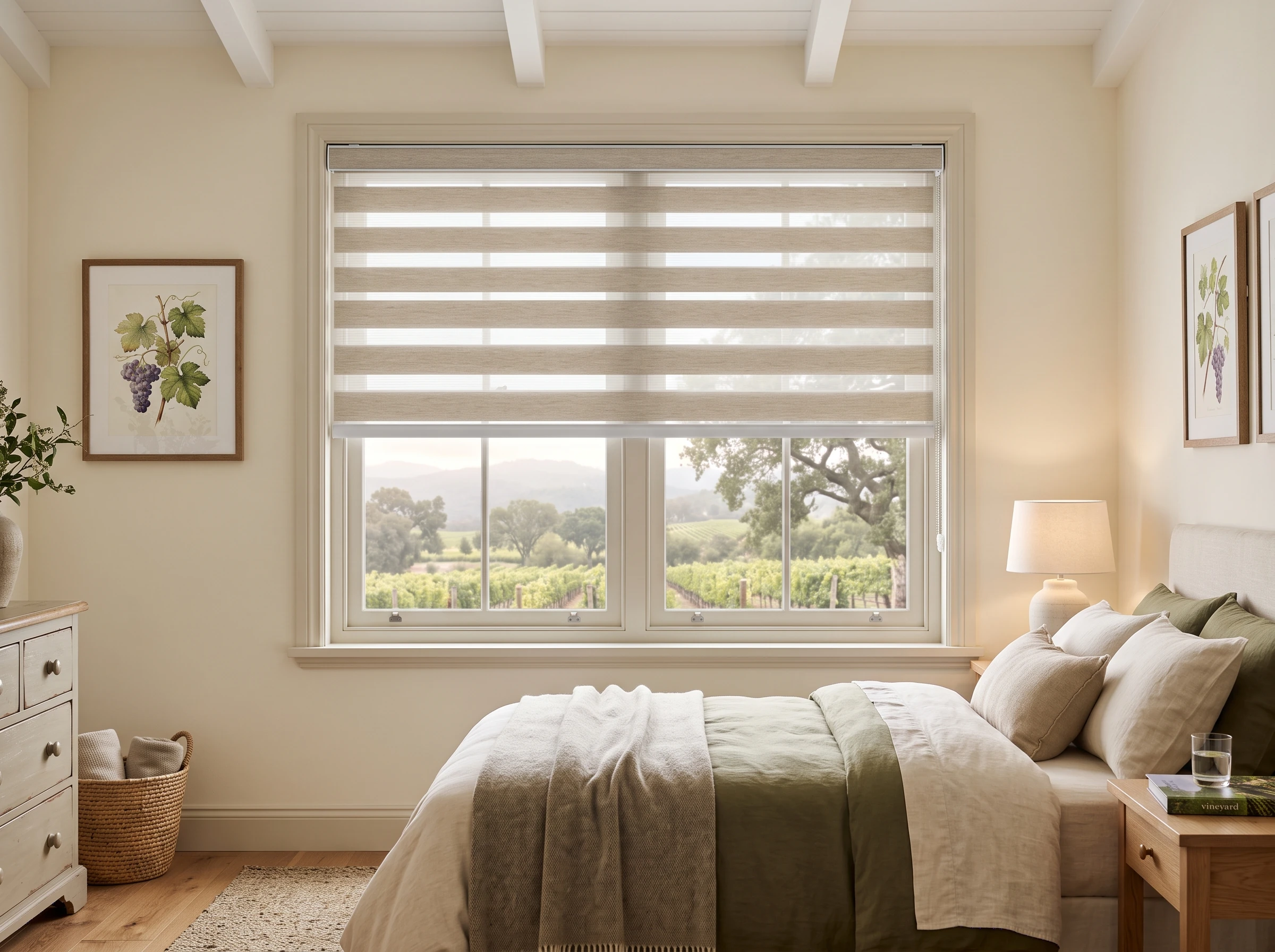
Banded sheer-and-solid fabric that tunes light hour by hour without losing the vineyard outlook.
Ask about this
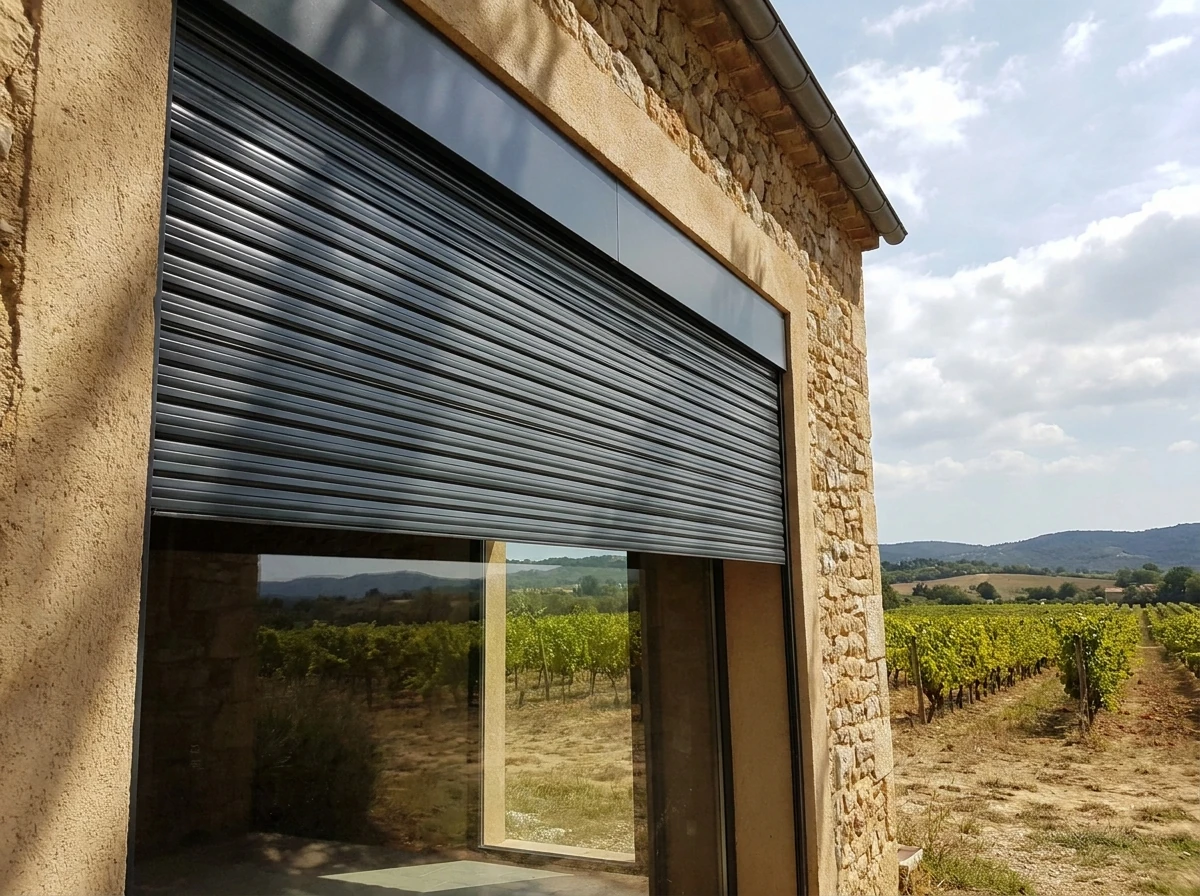
Aluminium or timber slats, the natural fit for the homestead's original deep-set reveal.
Explore
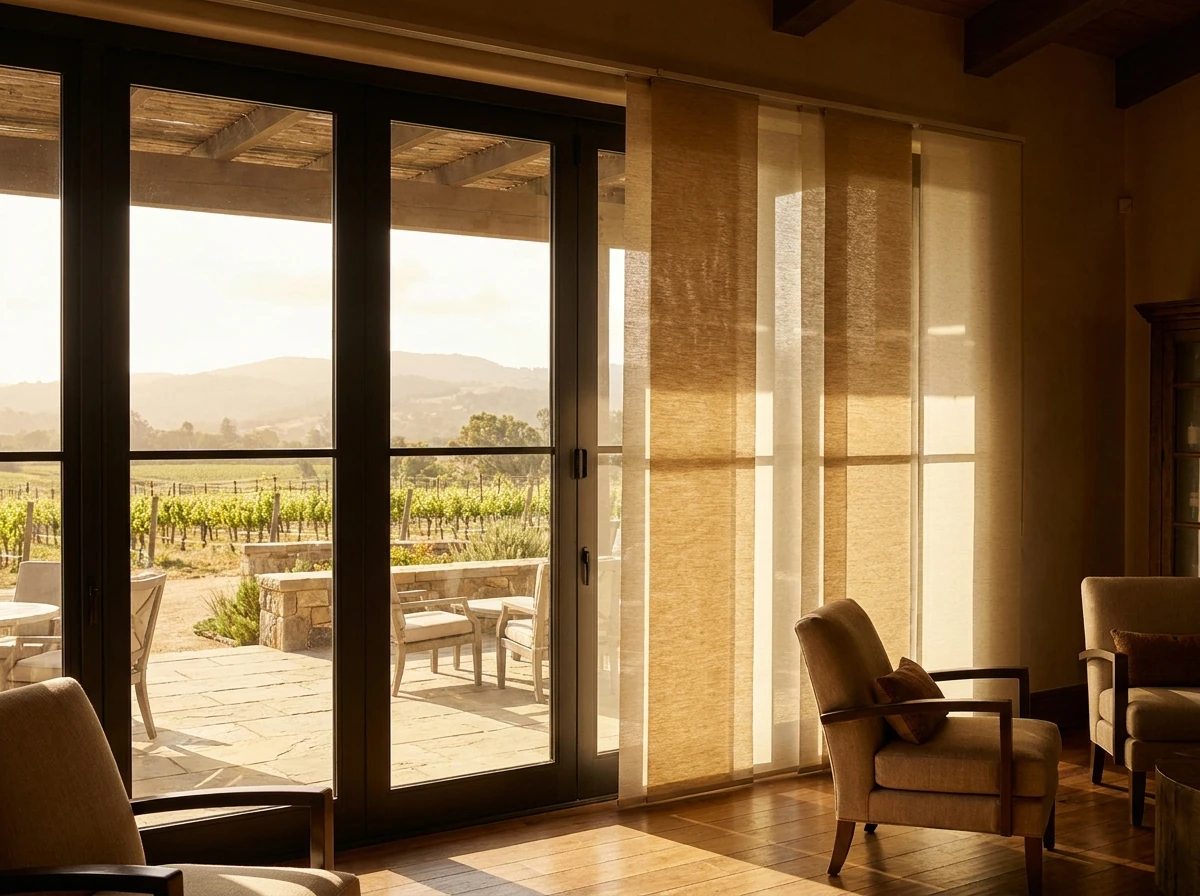
Wide stacking doors onto the vines, covered without a single seam line.
Ask about this
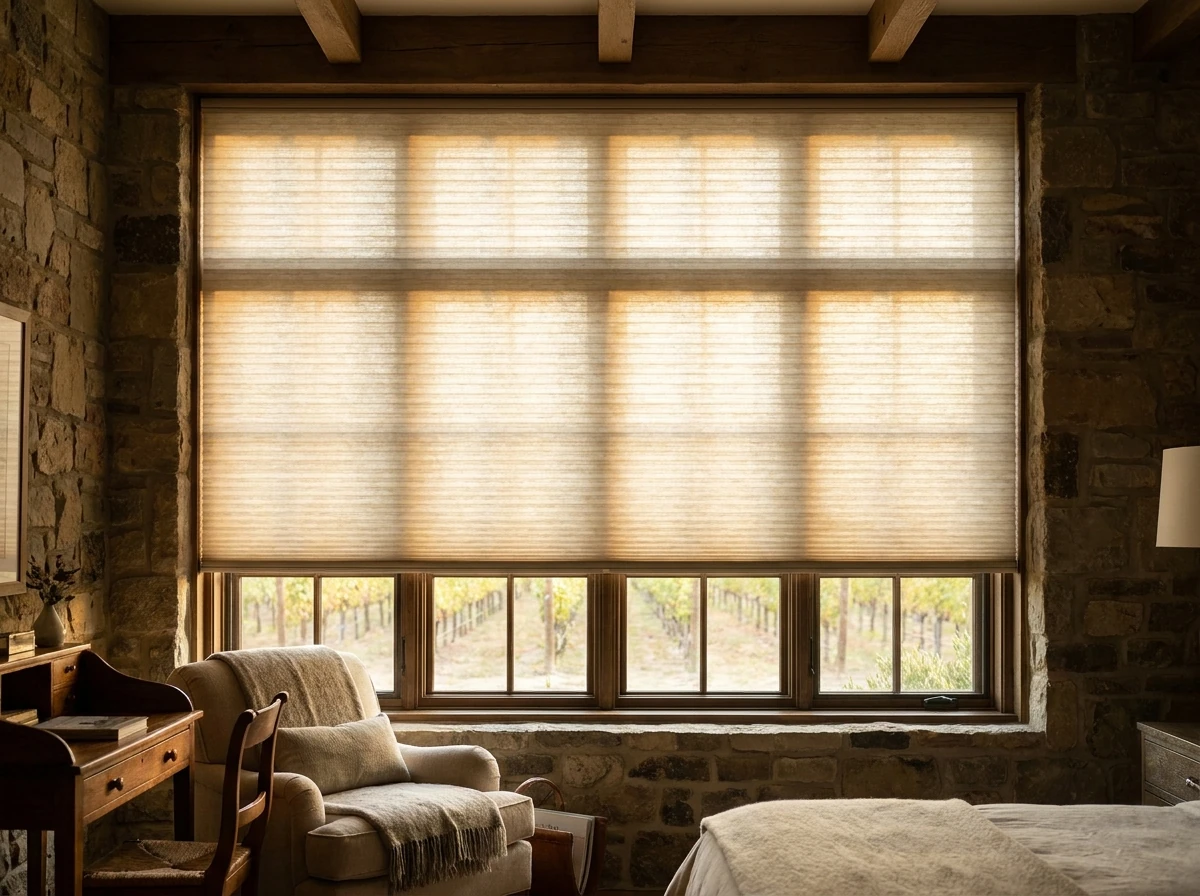
Genuine blackout for a guest suite kept for visitors, with a real insulating bonus in a stone-walled room.
Ask about this
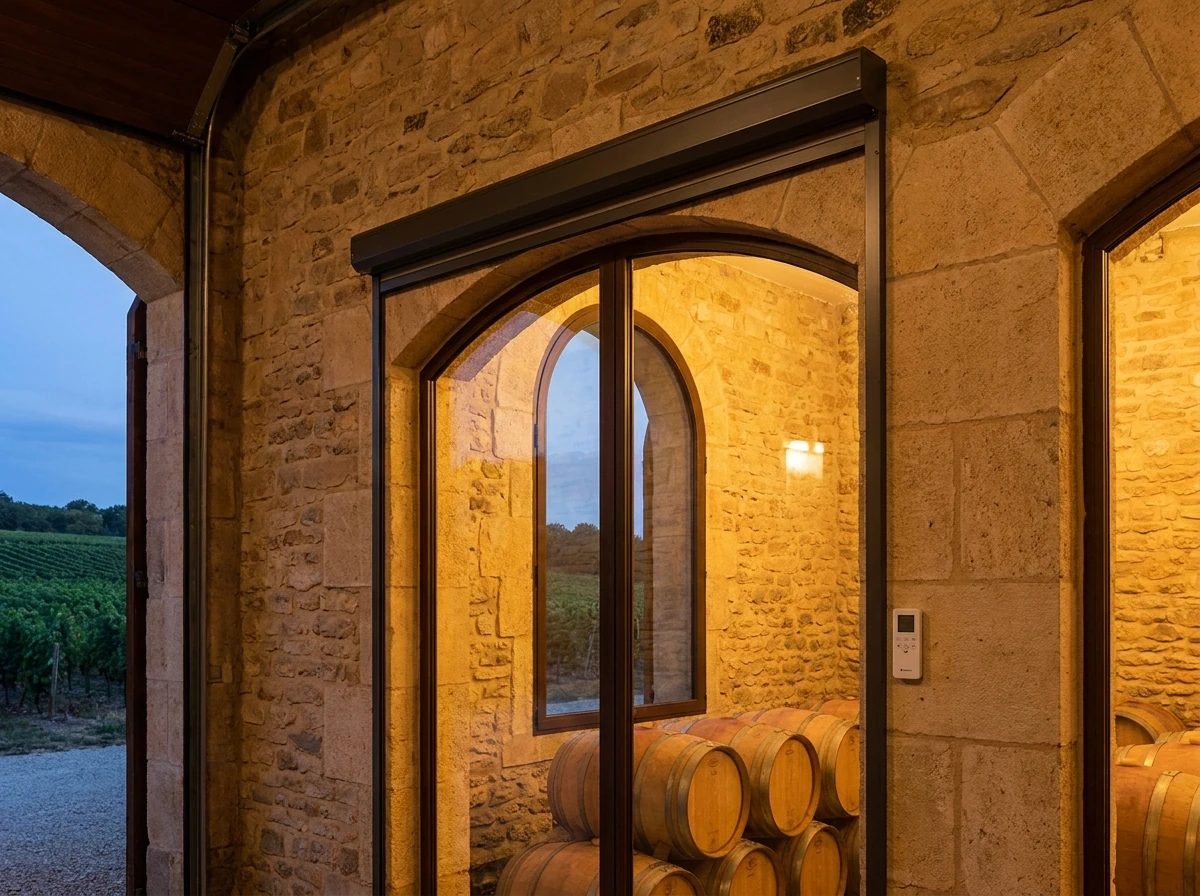
Blinds that disappear into the new cellar-door wing's ceiling until you need them.
Ask about this
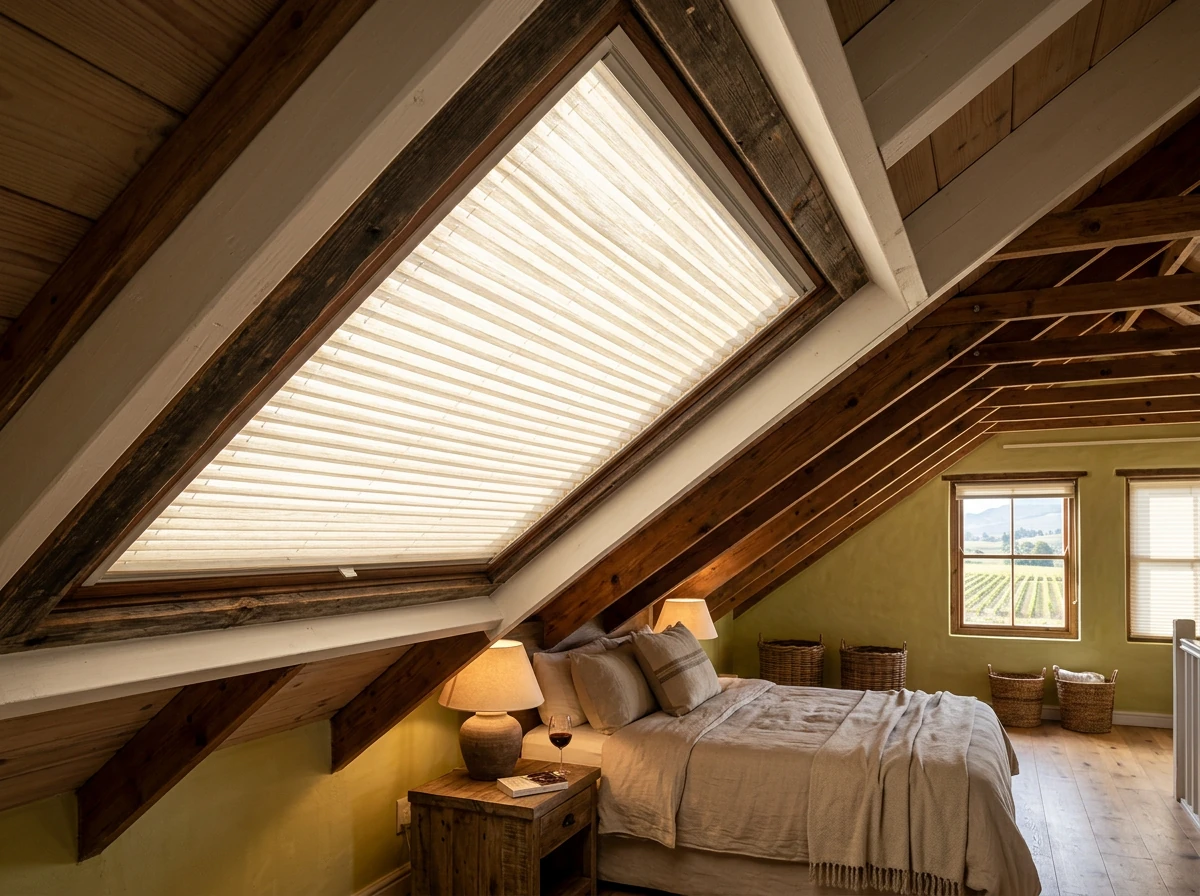
Fitted to the loft conversions and gable windows other suppliers won't quote.
Ask about this
Heat and extreme summer UV stopped at the glass, before either reaches the tasting room.
Ask about this
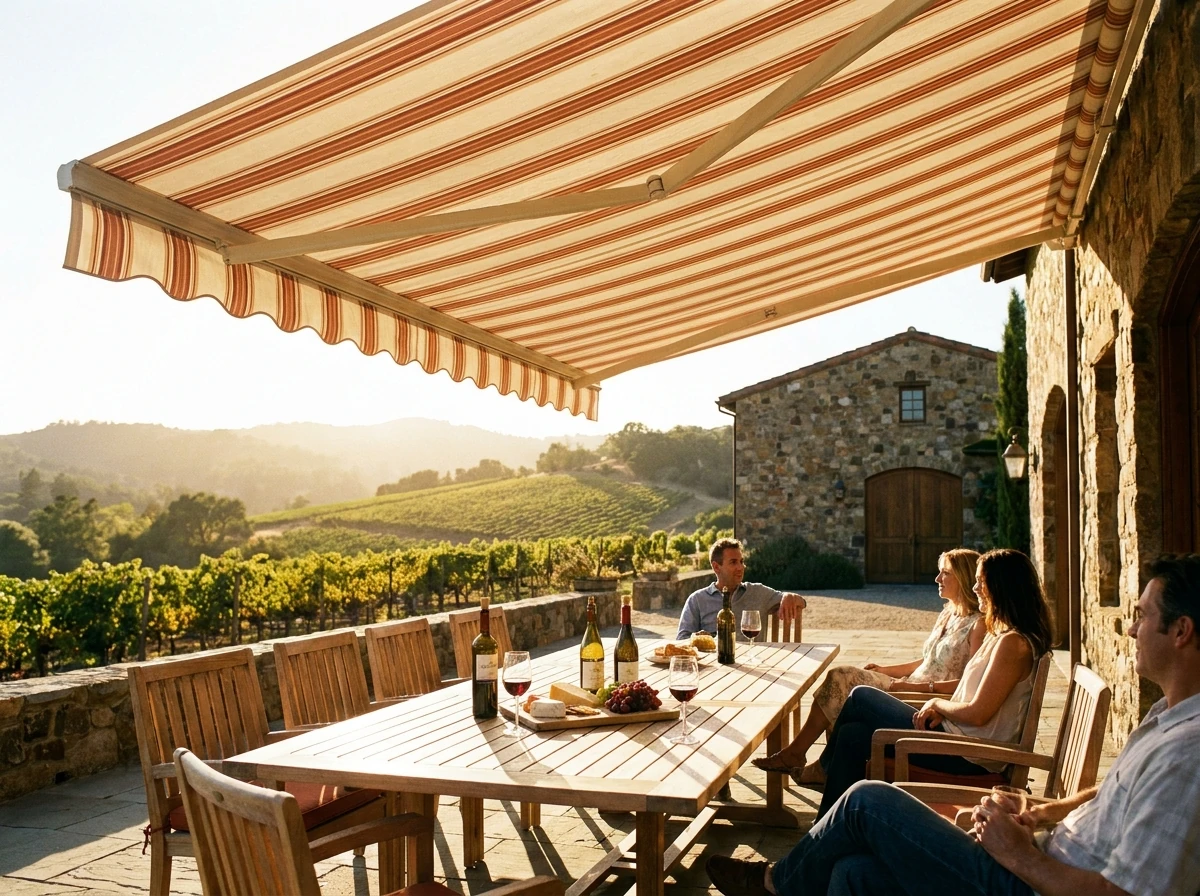
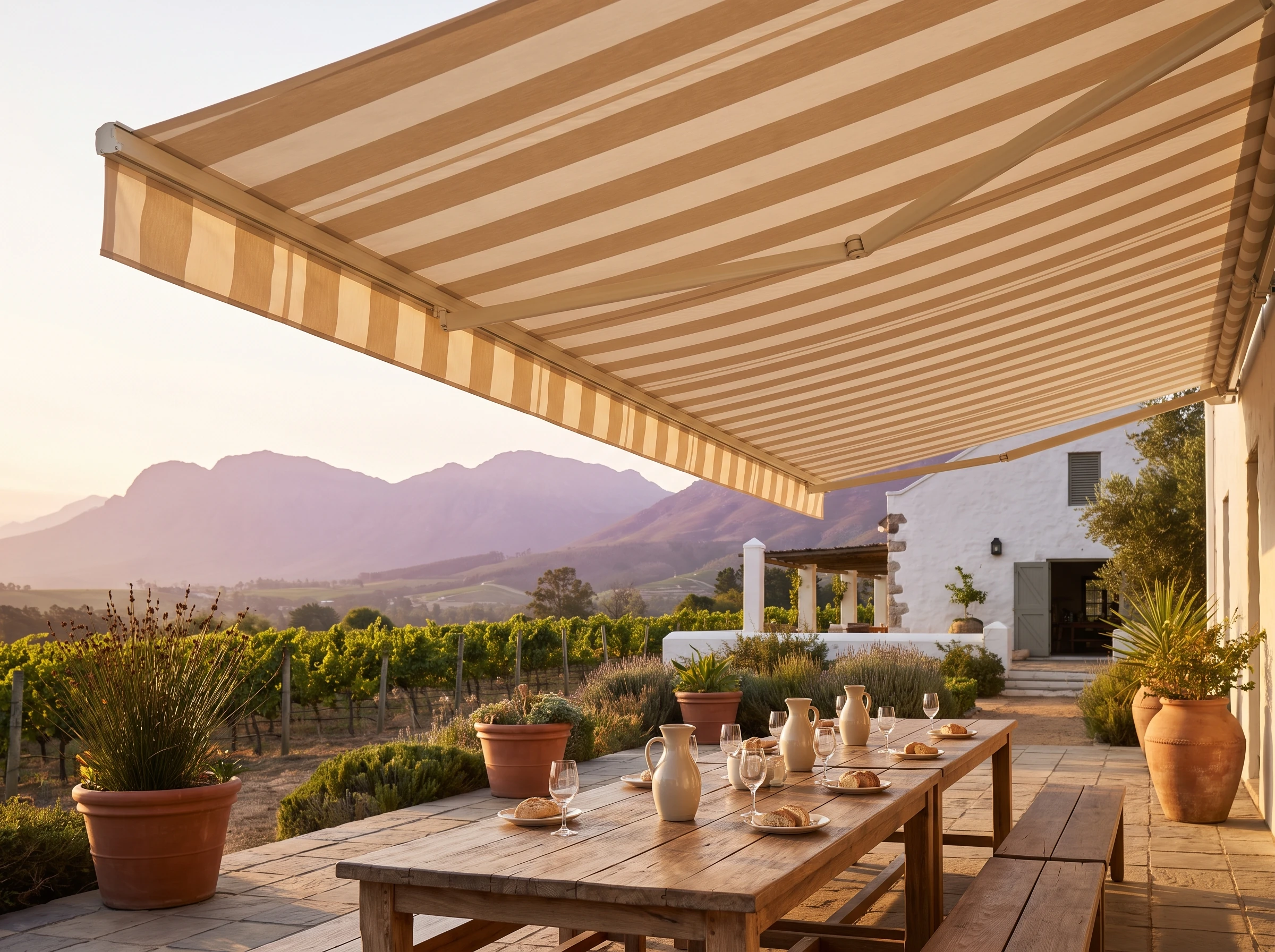
Shade over the tasting table, gone again the moment the south-easter picks up.
Explore
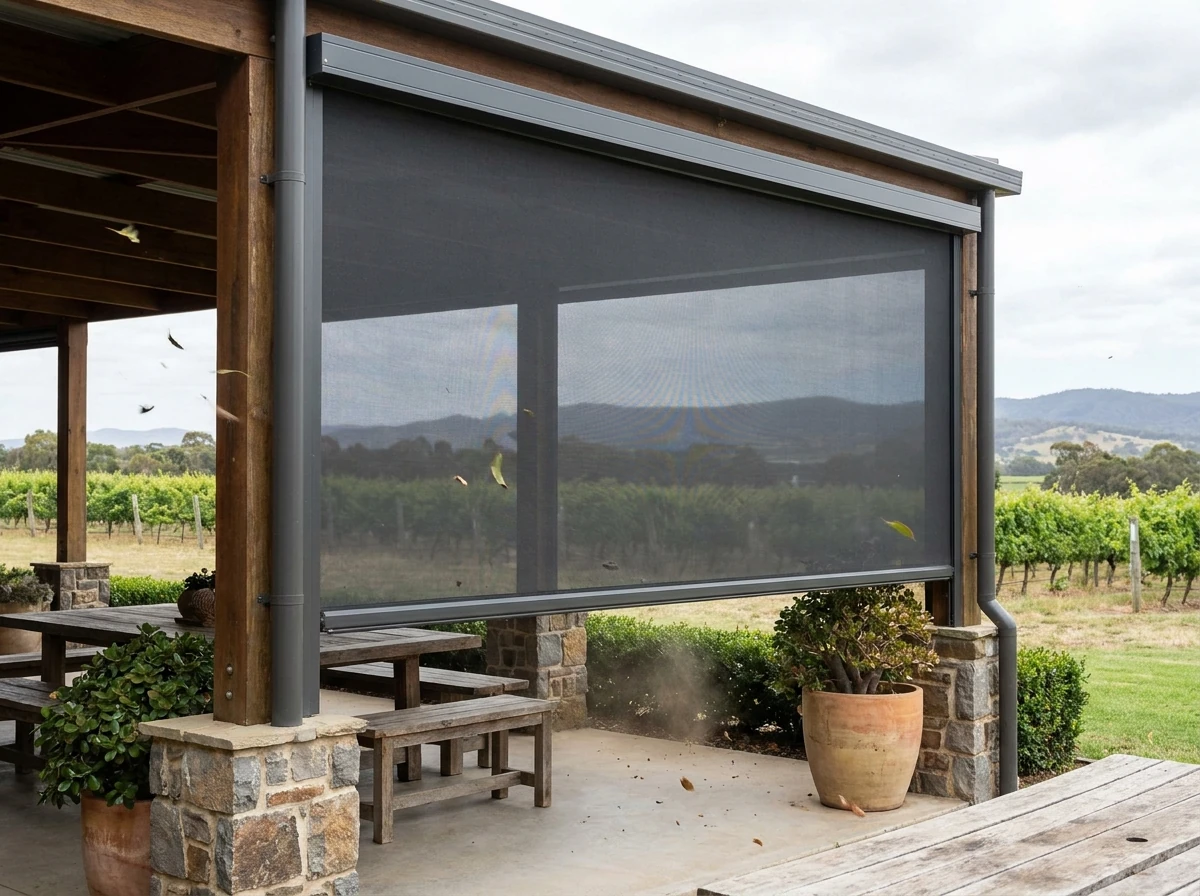
Wind-proof mesh that closes the veranda in without boxing up the view.
Explore
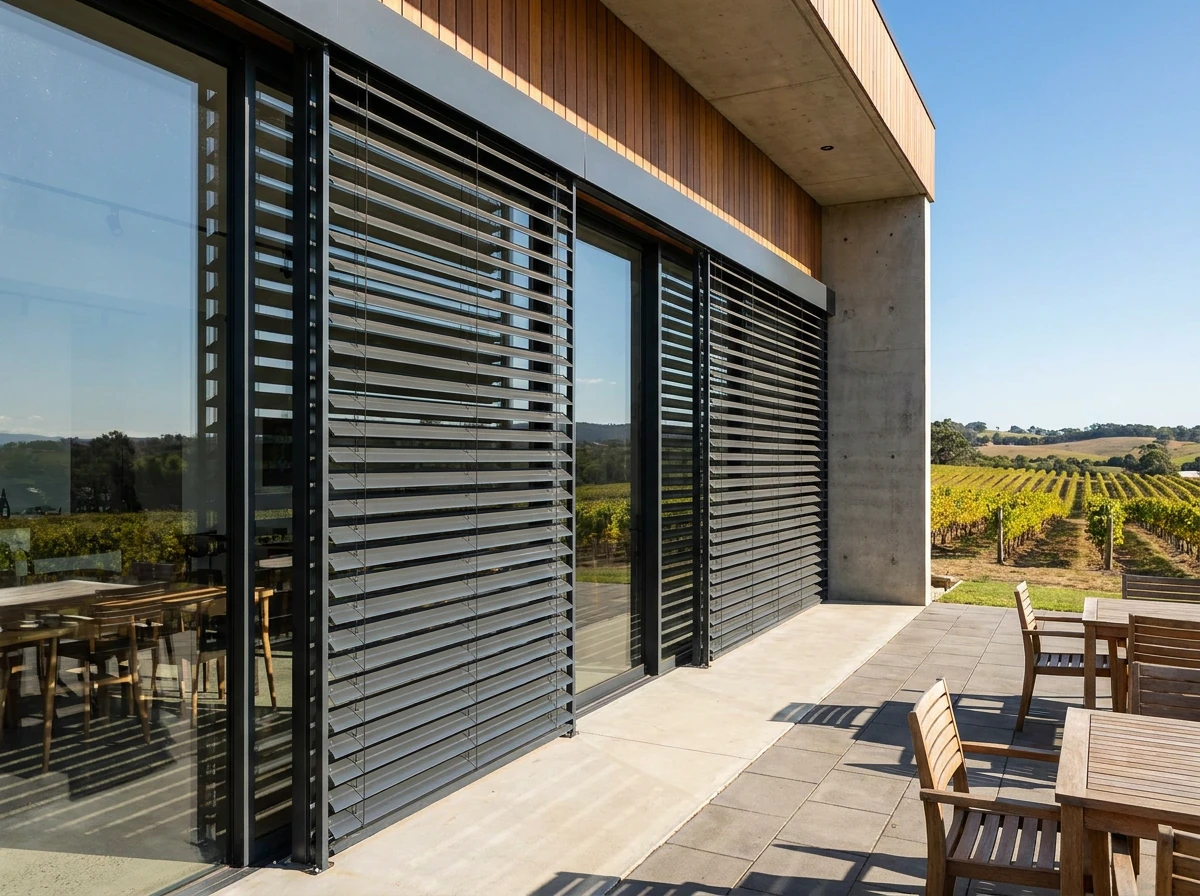
Sun, glare and total blackout in one motorised system on the outside of the glass.
Shading, not security. Our roller shutters are made for sun, heat and glare control. They are not security-rated shutters — that's a different product, quoted separately on request.
Ask about this
One app, every blind — including the cellar doorway nobody wants to reach with a pole.
Ask about this
Glare cut, vineyard held — the argument the whole route is built on.
The Stellenbosch Wine Route was South Africa's first — 11 founding farms, approved in April 1971, the model every other route in the country later copied. Fifty-five years on, it is still a working road network, not a scenic loop, and the homesteads along it carry a pattern we measure for on every visit: an old lime-washed core with small, deep-set windows, and a newer cellar-door or guest-cottage wing built almost entirely of glass.
Banghoek climbs to 720m on the Helshoogte Pass and catches up to 2,000mm of rain a year; Bottelary sits as low as 100m and runs the warmest, driest ward on the route; Devon Valley's small basin traps heat the wind never quite reaches; Simonsberg-Stellenbosch's farms read the mountain directly, morning sun square-on, gone fast by mid-afternoon. We measure each ward for its own numbers, not a single Winelands average.
Under the National Heritage Resources Act, any structure over 60 years old is automatically protected — altering a Cape Dutch gable needs a permit from Heritage Western Cape. The homestead's original small windows take an internal blind that changes nothing visible from outside; the cellar-door or cottage wing built in the last fifteen or twenty years to frame the vineyard carries no such constraint, and is where external shading earns its keep.
This is a winter-rainfall basin — June and July carry the wet season, not a highveld hail calendar. What we design against instead is the south-easter, which builds through spring and summer and typically peaks around five in the afternoon. Every motorised awning or screen on an exposed terrace here carries a wind sensor as standard, not an upsell.
A tasting room's whole argument is the vineyard through the window. Sunscreen roller and day/night banded fabric are the default here for exactly that reason — they cut the glare and the summer UV, which regularly reads 11 to 13 on the extreme scale, without taking the view away the way a blockout roller would.
We measure and fit across the full route, but these four wards each bring a genuinely different brief. Scroll the strip below — or use the arrows — to see how the specification changes stop by stop.
Farms on the lower slope read the mountain directly — square morning sun, gone fast by mid-afternoon.
Explore this ward 02 250–720m · the Helshoogte PassThe highest, wettest ward on the route — up to 2,000mm of rain a year and a pass that funnels the wind.
Explore this ward 03 a small, sheltered basinTucked off the old Paarl road — less wind than the rest of the route, but heat that stays put through the day.
Explore this ward 04 100–412m · the warmest wardOpen, rolling farmland north-west of town — the driest, warmest ward on the route, with little mountain shelter.
Explore this ward
Shade over the tasting table, gone again the moment the south-easter picks up.
The same honest process whether you're fitting one homestead window or every glass pane on a new cellar-door build.
Tell us about the homestead, the cottage or the cellar door, and what's actually bothering you about the light or the heat, through the form or chat.
A consultant visits with samples, measures every opening — the original sash frame and the new glass wing both — and talks through fabric and control options.
A clear, itemised quote per window or door — no surprises, and no pressure to decide on the spot.
Your blinds, shutters or awning are made to order and installed cleanly by hand, with the operation demonstrated before we leave.
Hardware specified for a working farm, not just a showroom.
Book a free in-home measure and get a written, per-window quote — no obligation, no pressure.
Fill this in and one of our expert consultants will contact you shortly to arrange your free in-home measure.
A real consultant calls you back to arrange a time that suits your farm or property.
Every quote follows an in-home measure — no guessed prices over the phone.